top of page

The Orinoco Delta is one of the richest ecosystems on the planet, a maze of mangroves, forests, and waterways that cradle the Warao people. For some background the Warao people have lived in the delta for a millennia. Archaeological evidence suggests they may even be one of the oldest continuous cultures in the Americas. With history of over 7,000 years the indigenous group continuously makes an effort to preserve their culture, values, language and customs. Ensuring the Warao community is both protected in their rights and land. Surrounded by this abundant nature, they live in deep connection with the environment, respecting what it offers and taking only what is needed. This landscape shapes their identity and their resilience. To understand the Warao, one must first understand the Delta, wild, vast, and sacred.

Education in the Delta happens differently. With limited access to a formal school system, the community takes responsibility for teaching the children by training its own leaders to become educators. They pass down knowledge in both Warao, their native language, and Spanish. Learning is woven into daily life through stories, practical skills, and shared experiences that connect children to their environment and traditions. Supporting this work ensures that new generations grow with knowledge, dignity, and the tools needed to preserve their culture.

Warao childhood begins close to nature and culture. From a young age, children learn the skills that define their community, learning to weave, collecting seeds, preparing natural dyes, and helping their families with daily tasks. Each strand they weave deepens their connection to the teachings of their elders. As they watch their mothers, grandmothers, and community leaders, they absorb not only technique but also the patience, respect, and intention behind every creation. These small hands carry the future of a lineage thousands of years old, and every gesture they mimic and every material they handle becomes part of a living heritage that continues through them.
In the Warao community, women are the pillars of strength, continuity, and cultural preservation. They weave to support their families, teach their daughters, care for their elders, and sustain the traditions that define their identity. Across generations, they stand as guardians of their people’s resilience. Their hands transform natural fibers into objects of beauty and purpose. Supporting Warao women means supporting an entire community, honoring the wisdom they embody, and helping ensure that their culture continues to thrive.

Every stitch tells a story. The process is slow, intentional, and rooted in a spiritual connection with the land. Through their craft, they preserve identity, dignity, and a way of life that cannot be replicated by machines. By donating, you help ensure these traditions continue and give artisans the support they need to sustain their community. Your support directly empowers families, preserves cultural heritage, and ensures these skills are passed on to future generations.
The Warao Community is one of the largest Indigenous groups in Venezuela, located in the Orinoco River, Delta. The river is the heart of Warao life, their roads, food source, history, and connection to the world. From the time they can walk, children learn to paddle small curiaras, following the rhythms of the current. From sunset to sunrise the Warao people row as their only source of transportation. As result of having this lifestyle their name is often translated as “the boat people.” For the Warao, navigating the Delta is not a skill but an inheritance, passed down like stories and traditions. Life flows at the pace of the river, shaping a culture that has survived for thousands of years. Here, water is not a landscape, it is home.

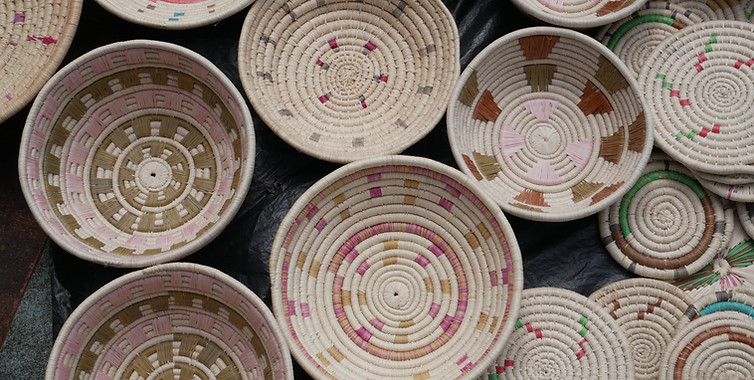
A collection of Warao baskets is more than a display, it is a museum of ancestral art. Each pattern is unique, each color drawn from the earth, and each weave shaped by the artisan’s personal style. Together, these pieces form a visual language that honors their culture. This is what creativity looks like when it is born from nature, patience, and community. Life in the Delta is communal. Women weave, children play, elders share stories, and families gather under open roofs made of palm. Each day unfolds in shared spaces where support, collaboration, and togetherness are a way of life. The Warao people thrive through connection working side by side, caring for one another, and teaching the younger generations the values that have kept their culture alive.


Warao homes are built on stilts above the river, open to the breeze, the sun, and the flow of daily life. These houses have no walls because community, in the Delta, is shared. Sounds, conversations, meals, and stories travel freely through the open space. Every structure is crafted with natural materials, showing a relationship with the land rooted in balance and respect. Here, simplicity is not lack but instead it is a way of living in harmony with nature.
The artesanía (handicrafts) of the Warao people are not just an art form but a reflection of indigenous tradition. Their craftwork is tied strongly to their world views and spirituality as the Warao artisans work almost entirely with natural materials from the Delta. Moriche palm is fiber used for weaving then gracefully colored by natural dyes such as fruit, tree bark, and leaves. Warao artisans are master weavers. Each basket, bowl, and bracelet reflects hours of patient craftsmanship, careful preparation, and artistic intuition. Their creations are not objects they are cultural expressions, made entirely with materials from their environment. When you hold a piece of Warao art, you hold a story shaped by dedication, tradition, and ancestral memory.

The joy of children in the Delta is pure and contagious. Even with limited resources, they carry a lightness rooted in community, nature, and tradition. Behind every smile is a story of strength, a family working together, a mother working for income, and a community supporting its young. Every contribution helps create more moments like this and supports the people who make them possible.

bottom of page